 Official Louisiana State Websites use .la.gov
  Secure .gov websites use HTTPS
RECYCLING
ANNUAL RECYCLING REPORT
RECYCLING RESOURCES BY CITY AND PARISH
RECYCLING COLLECTION CENTERS AND MRFs
RECYCLING GRANT OPPORTUNITIES
RECYLING NEWS
Recycling in Louisiana
Annual Recycling Report Form for Parishes and Municipalities
The Louisiana Revised Statutes 30:2413.A.9 requires LDEQ to submit an Annual Recycling Report to the House Committee on Natural Resources and Environment and the Senate Committee on Environmental Quality on the status of resource recovery and recycling programs in the parishes and municipalities throughout the state. In an effort to develop, strengthen, and implement comprehensive data collection efforts that demonstrate progress towards the National Recycling Goal and Food Loss and Waste Reduction Goal, LDEQ has secured the Municipal Measurement Program™ (MMP™), an online survey platform for standardized reporting. The MMP™ is free for parishes, municipalities and collection centers. LDEQ will use the MMP™ as an assessment tool in order to collect and compile data for the Annual Recycling Report. Use of the MMP™ will allow access to high-quality and independently collected information from the parishes, municipalities, recycling collection centers, and yard and food waste collection programs.
For more information on the MMP™ and to participate in the Annual Recycling Report, follow this link: https://www.municipalmeasurement.com/.
Annual Recycling Report Form: PDF/WORD

The Louisiana Department of Environmental Quality (LDEQ) is required by the Louisiana Revised Statutes 30:2413.A.9, to submit an annual report to the House Committee on Natural Resources and Environment and the Senate Committee on Environmental Quality on the status of resource recovery and recycling programs in the parishes and municipalities throughout the state. LDEQ in turn is authorized to collect and compile data from the parishes and municipalities on resource recovery and recycling programs in those jurisdictions.
Please click above to download the reporting form in PDF or MS Word format or fill it out online here: Annual Recycling Report Online
PAST ANNUAL RECYCLING REPORTS
2023 Recycling Annual Report to the Legislature
2021 Recycling Annual Report to the Legislature
2020 Recycling Annual Report to the Legislature
2019 Recycling Annual Report to the Legislature
2018 Recycling Annual Report to the Legislature
Corporate Recycling Tax Credits PDF / Document
Taxpaying entities who purchase qualified new recycling manufacturing or process equipment, and/or qualified service contracts, may be eligible for a tax credit of 14.4% against Louisiana income and corporation franchise taxes. The equipment must be new machinery or apparatus used exclusively to process post-consumer waste material, and/or recovered material, or new manufacturing machinery used exclusively to produce finished products from >50% post-consumer waste material in the state of Louisiana. Applicants must complete an Application for Income Tax Credit for Qualified New Recycling Equipment (see above link). More information can be found in the DEQ Solid Waste regulations, LAC 33:VII.Chapter 104. https://www.deq.louisiana.gov/resources/category/regulations-lac-title-33
Electronics Recycling
Drop-Off Programs for E-Recycling in Louisiana
- Check out DEQ's E-Recycling Brochure.
- Note: The Department does not collect electronics for recycling. We will be happy to connect you with the nearest recycling opportunity.
- Visit https://www.epa.gov/recycle.
Louisiana Recycling Plans and Partnerships
In the 2022 Regular Session, the Senate Concurrent Resolution NO. 13 was adopted. SCR 13 was a request that the Secretary of LDEQ study and make recommendations for strategies to increase the recycling of plastic.
After holding a series of five dialogue sessions, LDEQ concluded that the future of recycling will require multiple approaches to establish new recycling programs, expand and increase existing programs, and provide long-term sustainability. The final assessment and recommendations can be found HERE.
Louisiana's Climate Action Plan gives recommendations with the purpose of leading Louisiana to achieve the goal of net zero greenhouse gas emissions by 2050, as directed in Executive Order JBE 2020-18.
Recycling Resources
Louisiana Recycling Coalition
The Louisiana Recycling Coalition (LRC) is a membership based network of individuals and representatives from government, industry, and non-profit entities that support environmental stewardship through materials reduction, reuse, and recycling in Louisiana. LRC provides advocacy, information, technical support, networking, and educational opportunities for and about recycling in partnership with local, state, regional and national organizations.

Keep Louisiana Beautiful
Keep Louisiana Beautiful (KLB) brings people together to build and sustain vibrant, clean communities. Through programs and a statewide network of affiliates, KLB provides the right tools and resources to prevent litter, reduce waste, increase recycling, and protect the natural resources of our communities. KLB’s mission is to promote personal, corporate, and community responsibility for a clean and beautiful Louisiana.
Capital Area Corporate Recycling Council
Capital Area Corporate Recycling Council (CACRC) accepts all computer-related electronics, including desktops, laptops, telephones systems, servers, gaming consoles, and more. Services include refurbishment and repurposing of computers, laptops, monitors, and other devices for discounted prices, data destruction, and pickup services.
Louisiana Beverage Association
The Louisiana Beverage Association(LBA) represents 16 soft drink production plants and distribution facilities located throughout Louisiana. These beverage companies have come together in an effort to reduce plastic use and increase collection of their bottles through a new sustainability initiative.
For info on grant opportunities such as the SERDC Recycling Infrastructure Grant Program and American Beverage Foundation for a Healthy America follow LBA's link: https://www.labev.org/grant-opportunities.

The Recycling Partnership (TRP) is dedicated to advancing a circular economy by building a better recycling system by working with communities and recycling facilities across the U.S. to improve access, collections, operations, and processing through grants and technical assistance opportunities.
Grant opportunities can be found at: https://recyclingpartnership.org/grants/
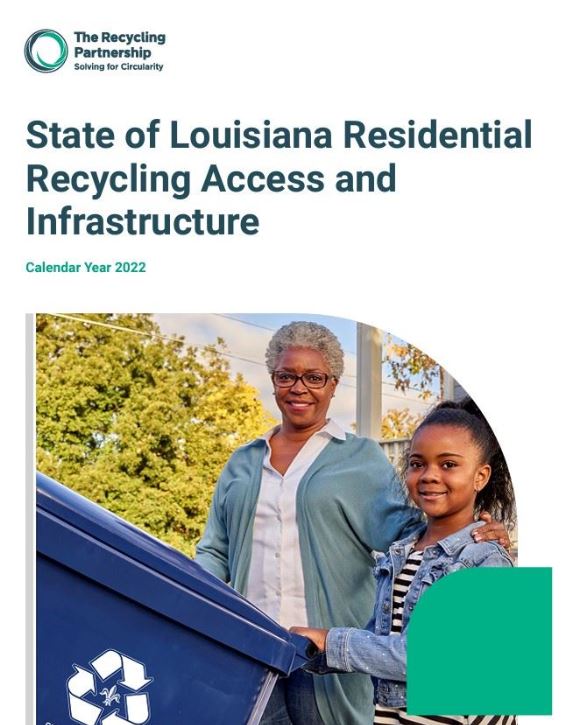
TRP has produced a comprehensive report for the year 2022 on the State of Louisiana Residential Recycling Access and Infrastructure. The research concluded that the opportunity in Louisiana is present to not only support the development of a residential recycling system but also, and even more importantly, to collect the hundreds of thousands of tons of recyclables that are currently being landfilled.


Waste Mangement's Guide to Recycling, along with common recycling myths debunked.


Wishcycling is the act of recycling things we wish could be recycled, even though they can't. Educate yourself with Republic Services guide to the basic rules of recycling so your good intentions aren't wasted by adhering to the rules in your area.
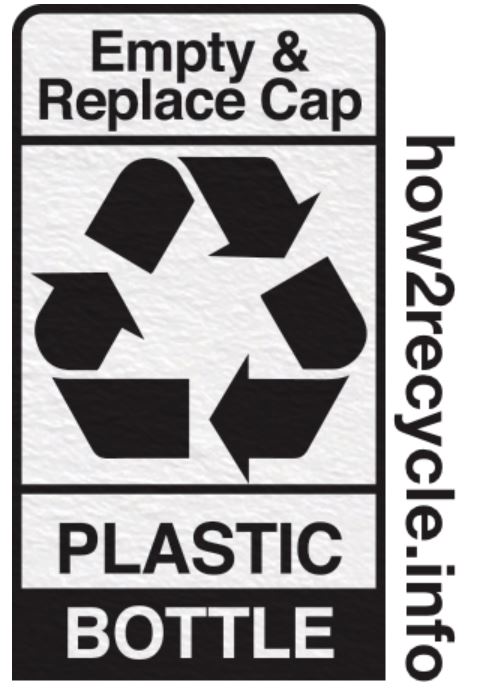
How2Recycle is a standardized labeling system that provides clear recycling instructions by offering consistent on-package recycling information.
EPA NEWS/REPORTS/TOOLKITS
EPA's National Recycling Strategy
The National Recycling Strategy focuses on creating a more resilient and cost-effective municipal solid waste recycling system. EPA published the National Recycling Strategy : Part One of a Series on Building a Circular Economy for All(PDF) on November 15, 2021.
EPA's National Strategy to Prevent Plastic Pollution
The National Strategy to Prevent Plastic Pollution focuses on reduction, reuse, collection, and the capturing of plastic waste while shifting to a circular approach. EPA developed the strategy by drawing on decades of efforts to conserve materials and resources while preventing and reducing pollution. EPA published the National Strategy to Prevent Plastic Pollution: Part Three of a Series on Building a Circular Economy for All(PDF) in November 2024 after receiving and reviewing public comments on the draft strategy in 2023..

EPA's National Strategy for Reducing Food Loss and Waste and Recycling Organics
The National Strategy for Reducing Food Loss and Waste and Recycling Organics, in conjunction with USDA and FDA, goal is to prevent the loss and waste of food and increase recycling of food and other organic materials, reduce greenhouse gas emissions, save households and businesses money, and build cleaner, healthier communitiesh. EPA published the National Strategy for Reducing Food Loss and Waste and Recycling Organics(PDF) on June 12, 2024 after receiving and reviewing public comments on the draft strategy.

EPA's Planning for Natural Disaster Debris
The Planning for Natural Disaster Debris guidance assists communities in planning for natural disaster debris before a disaster occurs. The guidance includes components of a debris management plan, management options for different natural disaster debris streams, resources for planning for natural disasters, and recommended pre-incident planning process to help prepare for disaster debris management.
EPA's Greenhouse Gas Equivalencies Calculator
The Greenhouse Gas Equivalencies Calculator converts emissions or energy data to the equivalent amount of carbon dioxide (CO2) emissions from using that amount. This tool calculates approximate estimates and should not be used for emission inventories or formal carbon emissions analysis.


EPA's Managing and Transforming Waste Streams Tool
The EPA Managing and Transforming Waste Streams Tool provides a table of measures communities can use to reduce waste and recover materials. This interactive tools allows sorting and searching or filters of best practices in the form of ordinances, policies, programs, contracts, outreach & technical assistance, and infrastructure development, so that the strategies given are tailored to community's needs and capabilities.

EPA's Waste Reduction Model (WARM)
EPA's Waste Reduction Model (WARM) provides estimates of potential greenhouse gas (GHG) emissions reductions, energy savings and economic impacts from several different waste management practices. WARM can be used by individuals and organizations ranging from state and local governments, students, small businesses, and other organizations interested in the GHG, energy and economic impacts from materials management decisions.
U.S. 2030 Food Loss and Waste Reduction Goal
On September 16, 2015, the U.S. Department of Agriculture (USDA) and EPA announced the U.S. 2030 Food Loss and Waste Reduction goal to cut food loss and waste in half by the year 2030. With this goal, we can reduce climate and environmental impacts associated with food loss and waste while improving food security and saving money for all.

The ReFED Insights Engine
ReFED Insights Engine offers solutions to the issue of food loss and waste in the US with tools such as the Food Waste Monitor, Solutions Database, Solution Provider Directory, Impact Calculator, Capital Tracker, and Policy Finder.

EPA's Recycling Infrastructure and Market Opportunities Map:
EPA ‘s Recycling Infrastructure and Market Opportunities Map was developed to assist in efforts to meet the National Recycling Goal of increasing the U.S. recycling rate of materials generated in municipal solid waste (MSW) to 50% by 2030 and to support the building of new recycling infrastructure through the Bipartisan Infrastructure Law (BIL). The map displays information on estimated generation, estimated recycling, and estimated recycling potential by ZIP code and material; locations of recycling infrastructure; potential primary and secondary end markets for recycled materials; market factors such as landfill tipping fees and bottle bill deposit prices; and other MSW infrastructure such as landfills and transfer stations.

EPA's Excess Food Opportunities Map:
The U.S. EPA Excess Food Opportunities Map supports nationwide diversion of excess food from landfills. The interactive map identifies and displays facility-specific information about potential generators and recipients of excess food in the industrial, commercial and institutional sectors and also provides estimates of excess food by generator type.