 Official Louisiana State Websites use .la.gov
  Secure .gov websites use HTTPS
 Welcome to our new and improved website! Take a look around, and use the Feedback form to let us know what you think!
Remediation
Welcome to Remediation
The Remediation Division is responsible for cleaning up contaminated sites and restoring land so that it can be safely and productively used again. Its mission is to maintain and enhance the state’s environment in order to promote and protect the health, safety, and welfare of the people of Louisiana by remediating contamination and environmental impacts in a consistent, efficient, and accountable manner.
The Remediation Division incorporates a number of different programs and initiatives that work together under a unified approach, including Louisiana’s Risk Evaluation/Corrective Action Program (RECAP), Brownfields Program, Voluntary Remediation Program (VRP), Natural Resource Damage Assessment (NRDA) Program, Hazardous Waste Site Cleanup Fund (HWSCF) Program, and the Federal Superfund Program. Through these programs, the Division fulfills its mission, by establishing cleanup standards; conducting and overseeing site investigations and evaluations; implementing and monitoring corrective actions; performing field verification; maintaining clear communication and documentation; and supporting training and research. Collectively, these efforts help reduce environmental and health risks, streamline the remediation process, improve responsiveness to the public and regulated community, and return contaminated areas to safe and beneficial use.
Risk Evaluation / Corrective Action Program
Did
You
Know?
Brownfields Program
Brownfield sites are properties where the presence or possible presence of pollution makes it harder to reuse the land. These places are often old industrial areas, abandoned gas stations, closed factories, or vacant lots where chemicals or waste may have been left behind. Even though they may be contaminated, Brownfield sites have strong potential for redevelopment once they are properly assessed and cleaned up. The Brownfields Program helps communities investigate these sites, remove environmental risks, and turn unused or unsafe land into places that can support new businesses, housing, parks, or other community needs.
Brownfields Home Page
Voluntary Remediation Program
VRP
Superfund Program
Hazardous Waste Site Cleanup Fund
The Hazardous Waste Site Program and the Hazardous Waste Site Cleanup Fund (HWSCF) provide the resources to address and remediate sites that have no viable responsible parties. Funds from the HWSCF are first allocated to the contractual obligations of the Superfund, which requires states to provide 10% matching funds for site cleanups financed with Superfund monies. Remaining funds are then dispersed to non-funded sites. Sites that qualify for this program are ranked based on the environmental hazards they present, considering the types of contamination, the site's locale, the populations nearby, and the surface or groundwater resources in the vicinity of each site. Sites are then addressed based on these rankings.
In addition to the full-scale remedial actions, the Remediation Division uses HWSCF funding to complete assessments of sites on the Hazardous Waste Site Cleanup Fund Prioritization List, as well as Potential Sites using a Site Investigation Contract (A Potential Site is a site at which a discharge or disposal of a hazardous substance is suspected but not yet confirmed by the LDEQ). A limited Removal/Remedial Contract also allows the Remediation Division to perform interim corrective actions at priority sites. HWSCF funding also allows the Remediation Division to pay for its operating expenses.
Natural Resource Damage Assessment (NRDA)
Gary A. Fulton Jr. P.G.
Remediation Division
P.O. Box 4314
Baton Rouge, LA 70821-43144
Division contact information:
Phone: (225) 219-3386
FAX: (225) 219-3398
Additional Remediation Resources Archive
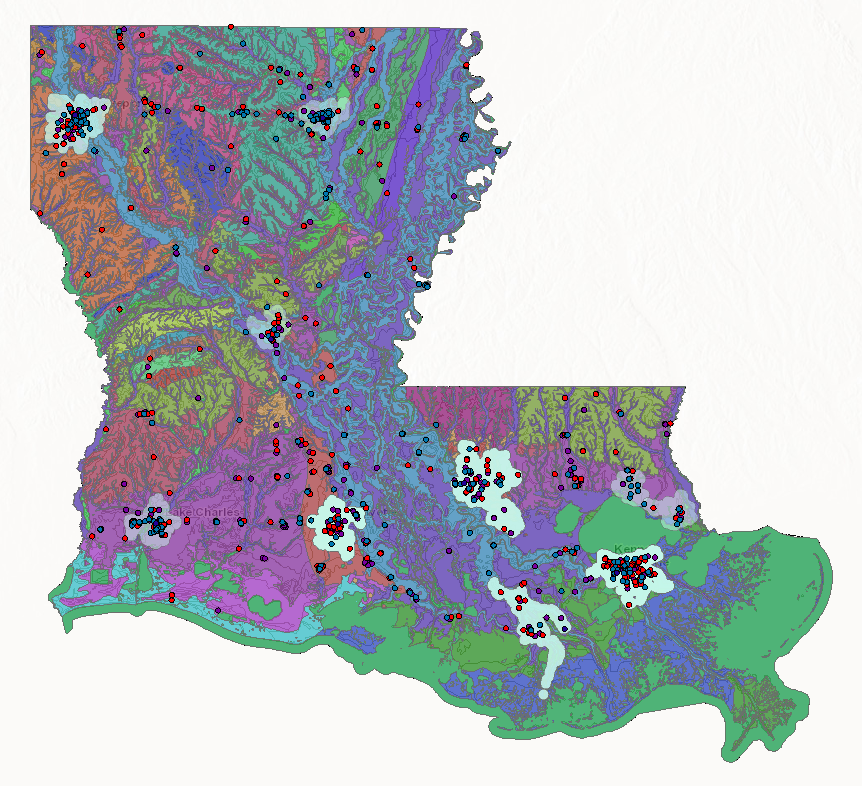
Construction Activities Advisory (10/23/2007) - Termination of Groundwater Certification Program
2007 Groundwater Advisory Document
DNR Registered Water Well Database (by Parish)
DNR Registered Water Well Database (by longitude and latitude)
